
During its first outbreak, the devastating effect of early mortality syndrome (EMS) on the global shrimp industry was primarily caused by the lack of information regarding the disease and its causative agent.
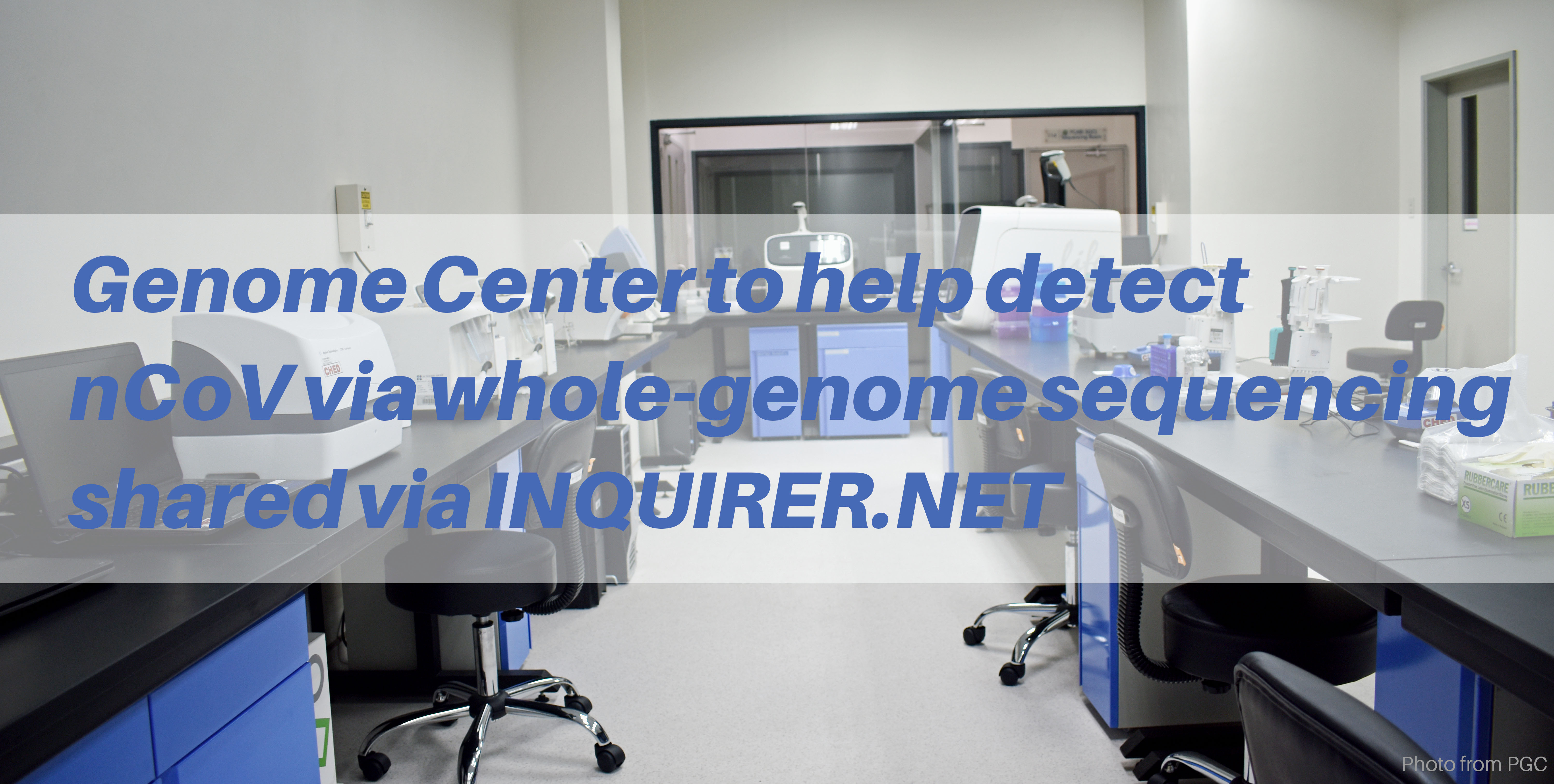
Genome Center to help detect nCoV via whole-genome sequencing
The Centers for Disease Control and Prevention (CDC) describes whole-genome sequencing as a “laboratory procedure that determines the order of bases in the genome of an organism in one process.”
According to CDC, scientists conduct data analysis, which is the fourth step of whole-genome sequencing, to compare “bacterial sequences and identify differences.”
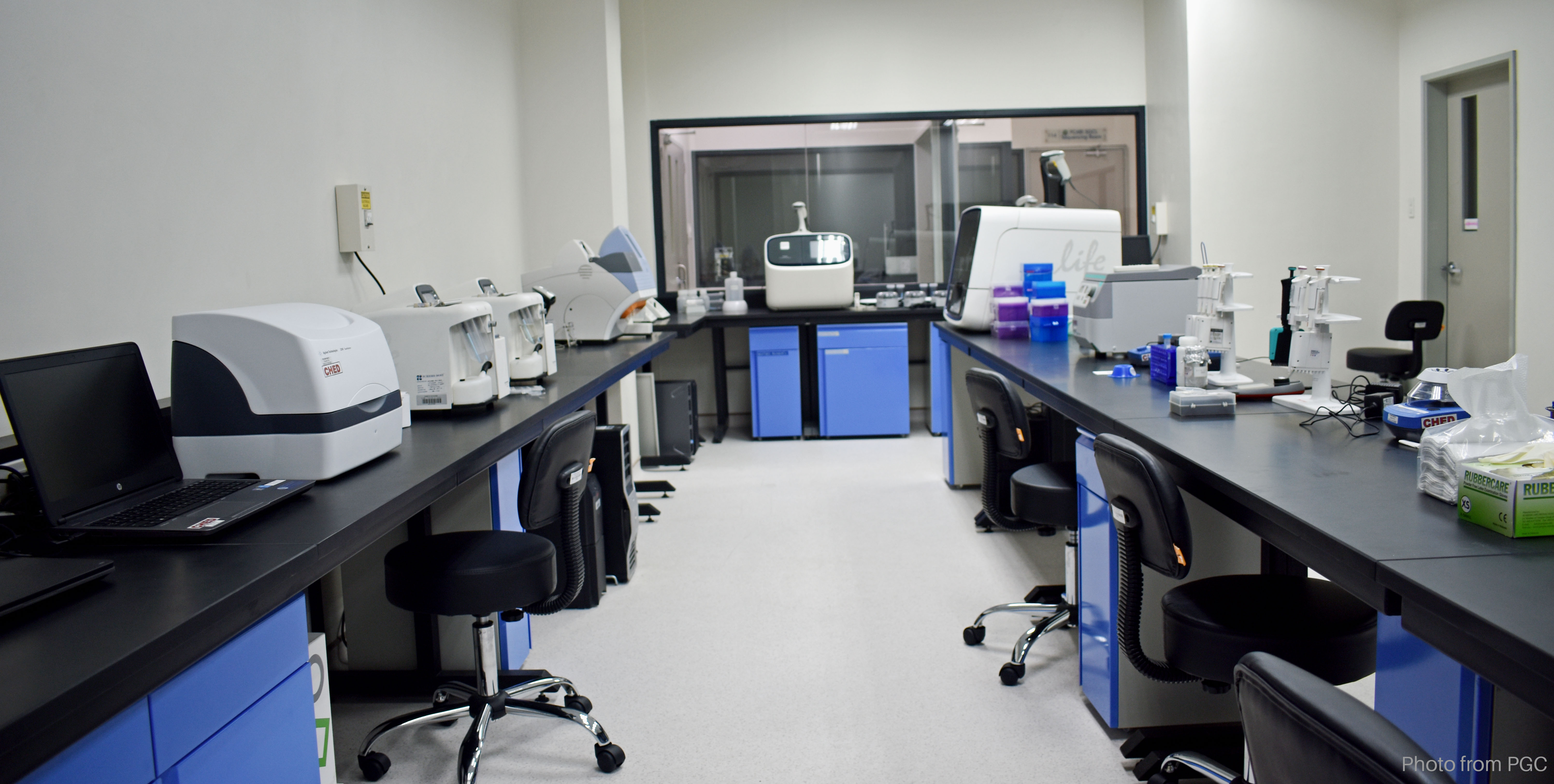
Philippine Genome Center gears up to verify presence of 2019-nCoV through whole genome sequencing
With the use of Next Generation DNA/RNA Sequencing equipment (NGS) available at the Philippine Genome Center (PGC) in the University of the Philippines Diliman Campus, the team of the DNA Sequencing Core Facility (DSCF) is ready and willing to assist RITM and the DOH in confirming suspected cases of 2019-Novel Coronavirus (2019-nCoV) in the country.
PGC Fora: The Story of the Filipinos Through the Genomics Lens
The forum will be held on January 31, 2020 from 08:30 am – 04:00 pm at the Institute of Biology Auditorium, National Science Complex, UP Diliman, Quezon City, 1101.
Philippine Genome Center
The Philippine Genome Center is a multidisciplinary research and service unit of the University of the Philippines for health, agriculture, biodiversity, and the environment.
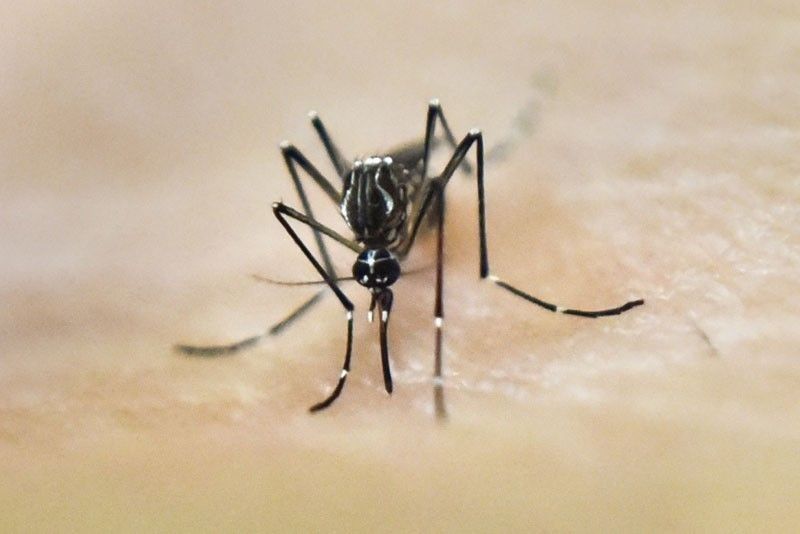
Local dengue test kit to be marketed internationally
Manila HealthTek is a spinoff company formed to pursue the commercialization of the dengue diagnostic technology developed by a team of UP Manila National Institutes of Health medical researchers led by Dr. Raul Destura.
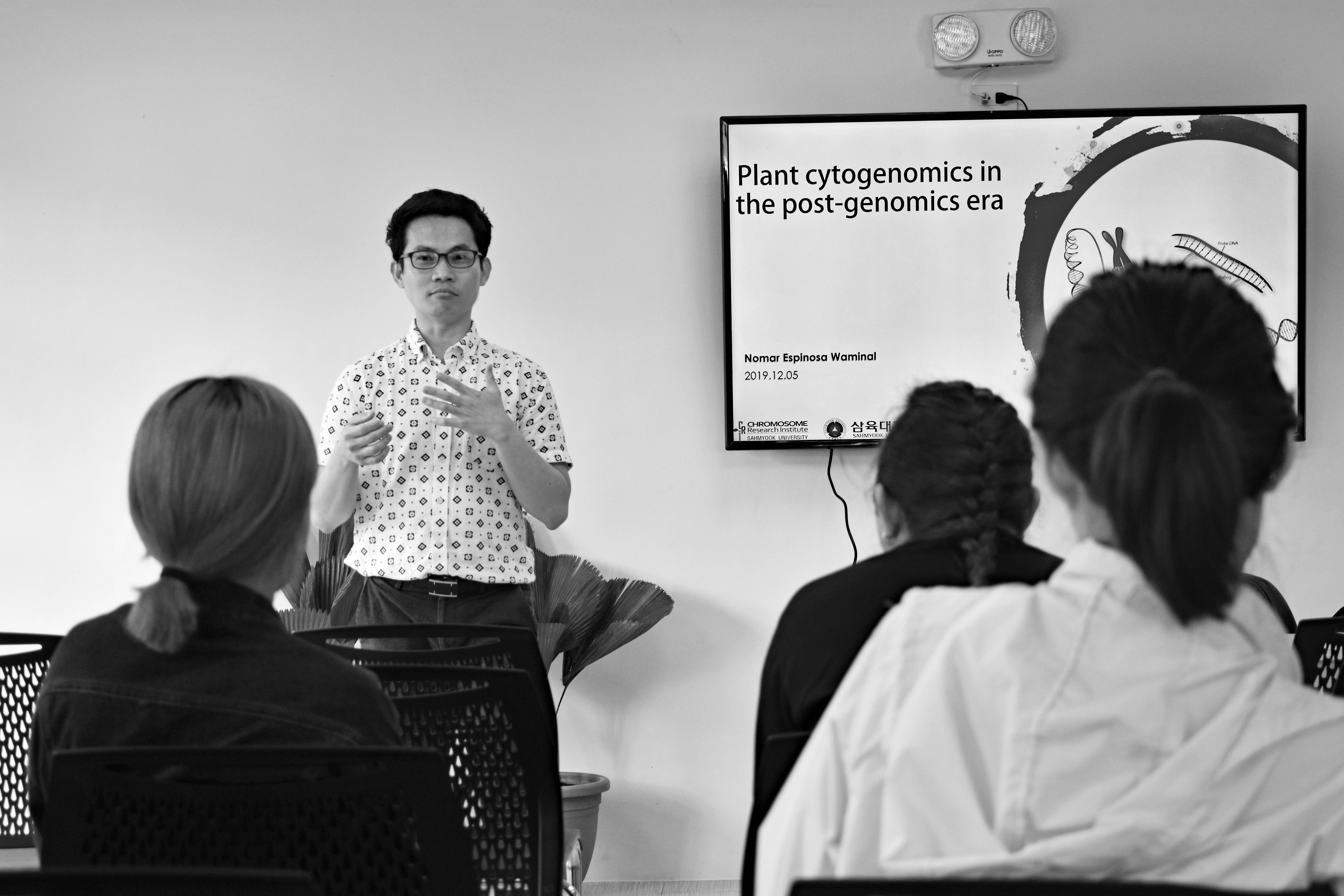
Cytogenetics in Plant Breeding: Conservation and Evolution in the Post-Genomics Era
This seminar features the PGC hosted Balik Scientist Dr. Nomar Waminal who will be presenting his talk on “Cytogenetics in Plant Breeding: Conservation and Evolution in the Post-Genomics Era”. Dr. Waminal is currently serving as a Research Professor under the Chromosome Research Institute at Sahmyook University, Seoul, Republic of Korea. He was a Samsung Global Scholar and received his Ph.D. in Crop Science and Biotechnology from Seoul National University.
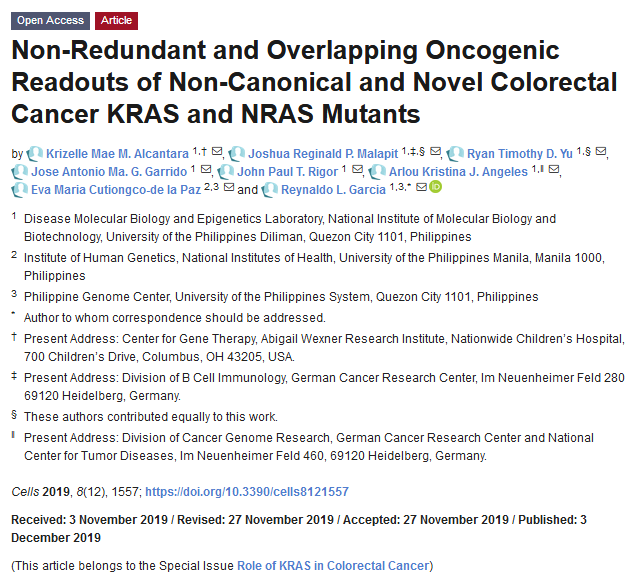
Non-Redundant and Overlapping Oncogenic Readouts of Non-Canonical and Novel Colorectal Cancer KRAS and NRAS Mutants
The efficacy of monoclonal antibodies targeting the epidermal growth factor receptor (EGFR) pathway for treatment of colorectal cancer (CRC) depends on predictive biomarkers that can identify likely responders or non-responders to therapy.
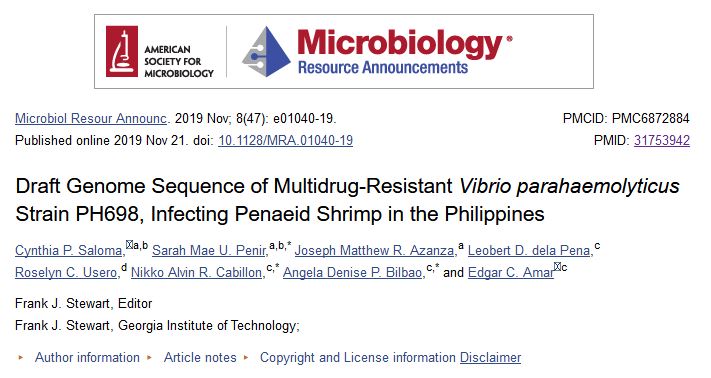
Draft Genome Sequence of Multidrug-Resistant Vibrio parahaemolyticus Strain PH698, Infecting Penaeid Shrimp in the Philippines
The emergence of multidrug-resistant bacterial strains in diverse settings has been reported globally. In the Philippine shrimp aquaculture industry, antibiotics are used for the treatment of bacterial diseases during the production cycle. We report the draft genome of Vibrio parahaemolyticus PH698, a multidrug-resistant strain isolated from a Philippine shrimp farm.
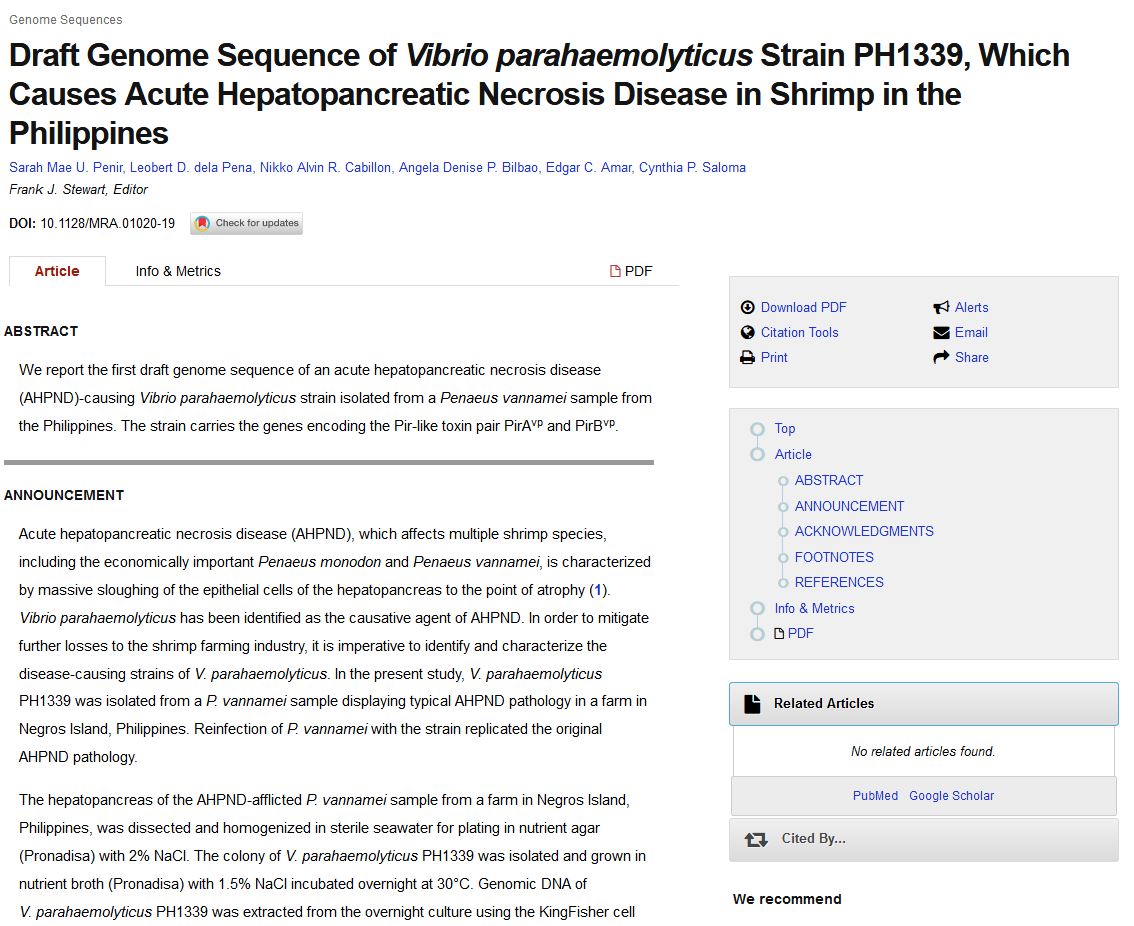
Draft Genome Sequence of Vibrio parahaemolyticus Strain PH1339, Which Causes Acute Hepatopancreatic Necrosis Disease in Shrimp in the Philippines
Acute hepatopancreatic necrosis disease (AHPND), which affects multiple shrimp species, including the economically important Penaeus monodon and Penaeus vannamei, is characterized by massive sloughing of the epithelial cells of the hepatopancreas to the point of atrophy (1).