

MANILA, PHILIPPINES — Leptospirosis is one of the Philippines’ most persistent and least talked-about health threats: a bacterial disease carried in contaminated water and soil, spiking every year the moment the rains and the floodwaters come. Two new peer-reviewed studies out of the University of the Philippines Diliman and the Philippine Genome Center now show that the picture may be worse than health workers assumed, not because the bacterium is new, but because of where scientists just found it living, and how completely it has settled in.

PGC poster presentations at the USJCMSP’s 24th EID Conference in Incheon, Korea
PGC researchers were invited to present their selected abstracts for a poster presentation during the United States-Japan Cooperative Medical Sciences Program (USJCMSP) 2024 International Conference on Emerging Infectious Diseases (EID).

Methods used in microbial forensics and epidemiological investigations for stronger health systems
Establishing and maintaining a national microbial forensic system to strengthen capacities in conducting forensic and epidemiological investigations should be prioritised by all countries, accompanied by a national policy that sets the legislative framework and provides for the system’s financial requirements.
Challenges on the Development of Biodiversity Biobanks: The Living Archives of Biodiversity
In this review, we highlight the necessity for biodiversity biorepositories by presenting their significant role in health, biodiversity, linking of big data, other translational research, and biodiversity conservation efforts.
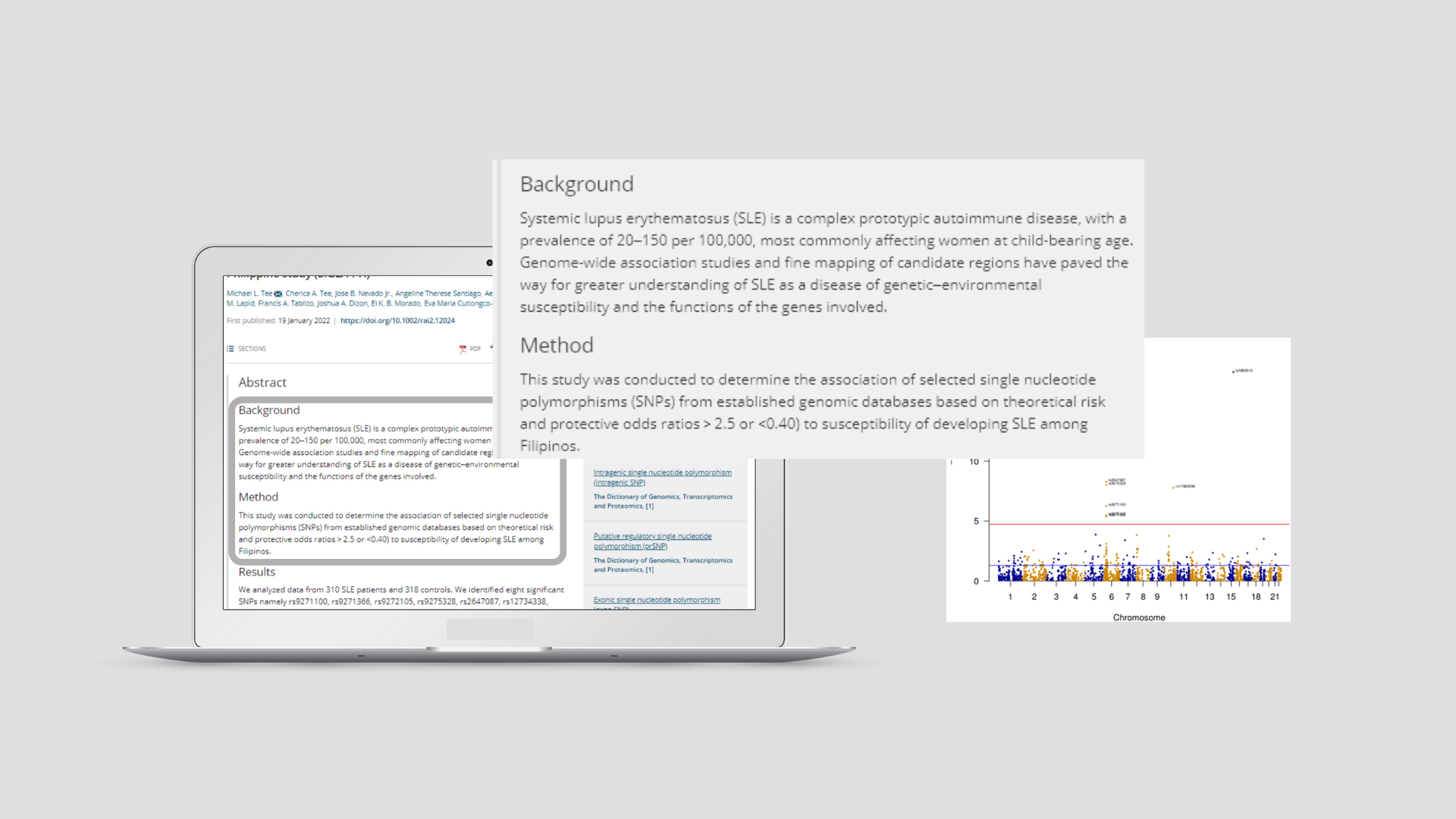
Single nucleotide polymorphism (SNP) in genes of lupus: A Philippine study (SIGLA-PH)
Eight SNPs were found to be associated with the development of SLE among Filipinos. Similar to previous genetic studies in lupus patients, majority of the SNPs were found in the major histocompatibilty complex genes in the HLA region. Our study identified two unique SNPs that will be validated as potential diagnostic markers for SLE. The findings of this study may contribute to the development of a polygenic risk score in determining susceptibility to SLE among Filipinos.
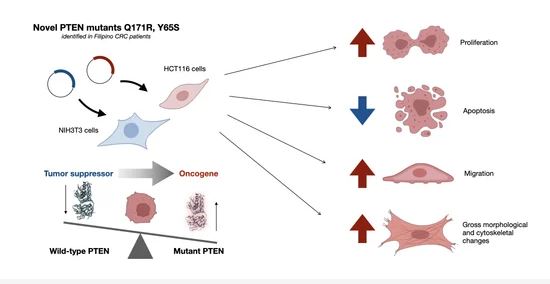
The Novel Phosphatase Domain Mutations Q171R and Y65S Switch PTEN from Tumor Suppressor to Oncogene
Phosphatase and tensin homolog deleted on chromosome 10, or PTEN, is a well-characterized tumor suppressor with both lipid and protein phosphatase activities. PTEN is often downregulated by epigenetic mechanisms such as hypermethylation, which leads to constitutive activation of the PI3K–Akt pathway.
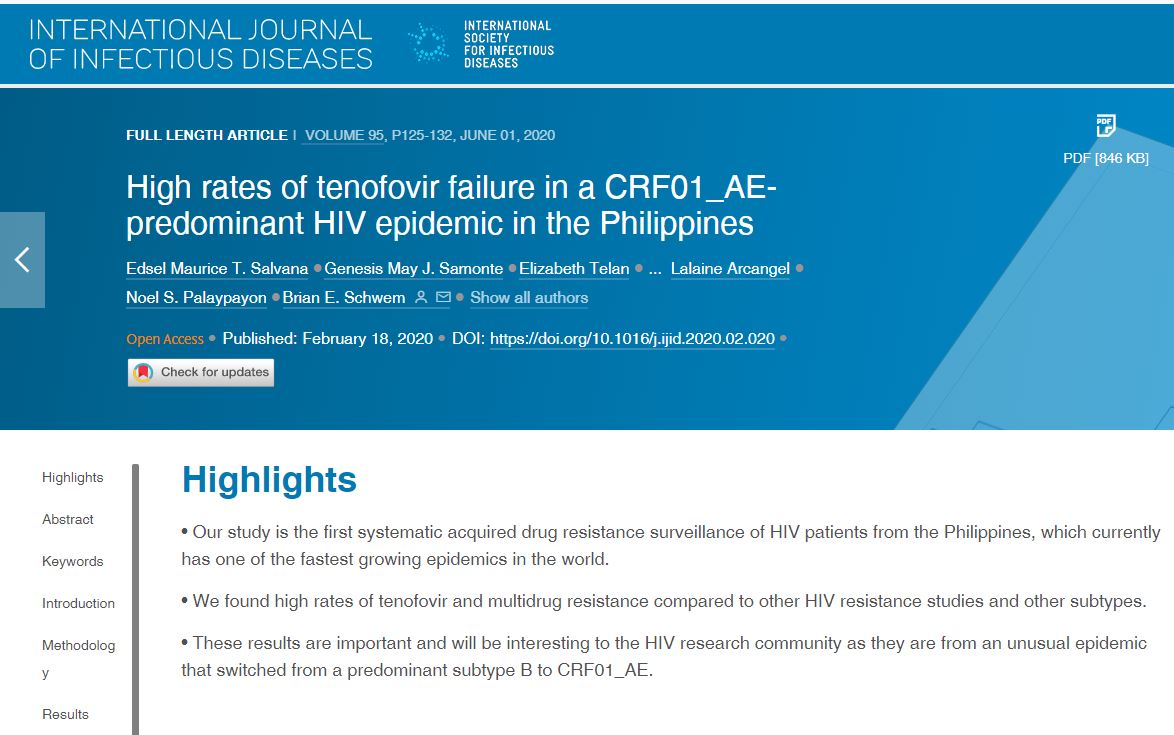
High rates of tenofovir failure in a CRF01_AE-predominant HIV epidemic in the Philippines
The Philippines has the fastest growing HIV epidemic in the Asia-Pacific. This increase was accompanied by a shift in the predominant HIV subtype from B to CRF01_AE. Increasing evidence points to a difference in treatment responses between subtypes. We examined treatment failure and acquired drug resistance (ADR) in people living with HIV (PLHIVs) after one year on antiretrovirals (ARVs).
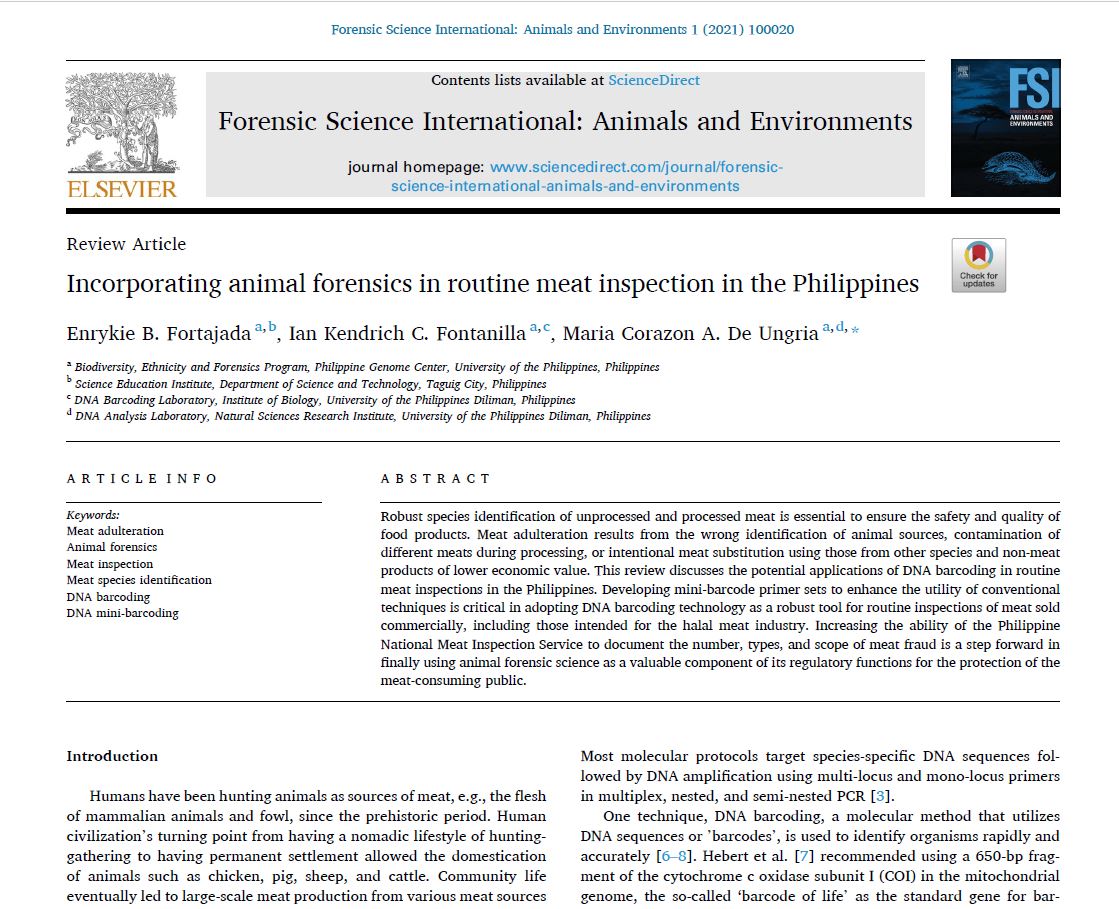
Incorporating animal forensics in routine meat inspection in the Philippines
Developing mini-barcode primer sets to enhance the utility of conventional techniques is critical in adopting DNA barcoding technology as a robust tool for routine inspections of meat sold
commercially, including those intended for the halal meat industry.

Nutritional properties and phenolic acid profile of selected Philippine pigmented maize with high antioxidant activity
Ten (10) accessions of pigmented maize collected from the various regions in the Philippines with the highest antioxidant activity were evaluated for several chemical and nutritional parameters such as proximate composition, carbohydrate profile (starch, amylose and amylopectin contents), phenolic acid, mineral (iron and zinc) and food energy contents.

Genetic Structure and Diversity of Banana Bunchy Top Virus (BBTV) in the Philippines
Banana bunchy top virus (BBTV) is an important disease of banana in the Philippines and in other banana-producing countries. This study was conducted to investigate the genetic structure and diversity of Philippine BBTV isolates which remain unexplored in the country. BBTV-infected plant tissues were sampled from banana-growing provinces (i.e., Cagayan, Isabela, Quirino, Batangas, Laguna, Rizal, Quezon, Palawan, Cebu, Leyte, and Davao del Sur) and the partial DNA-R gene of BBTV was sequenced.