
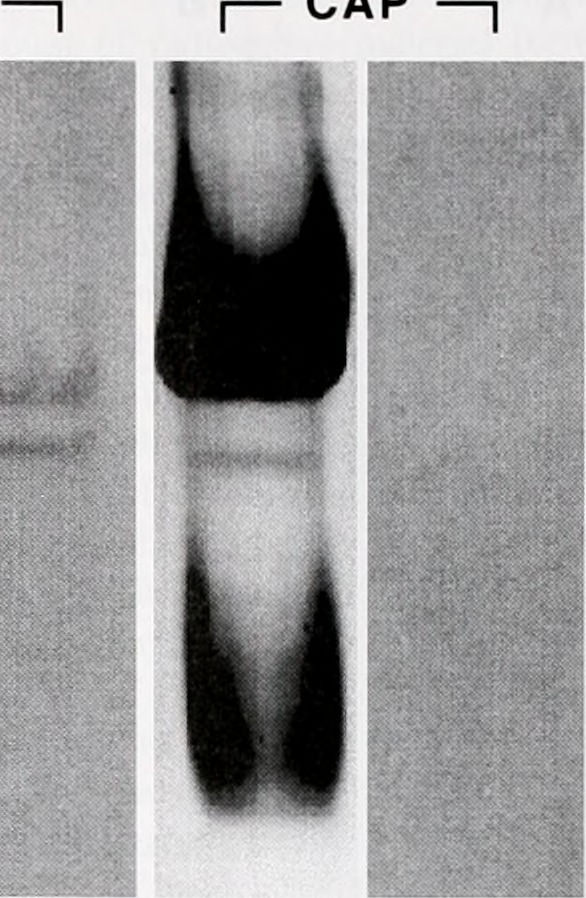
Cleft palate (CP) is a common birth defect occurring in 1 in 2,500 live births. Approximately half of infants with CP have a syndromic form, exhibiting other physical and cognitive disabilities. The other half have nonsyndromic CP, and to date, few genes associated with risk for nonsyndromic CP have been characterized.

Kinetic Capillary Electrophoresis – a Swiss Army Knife for Studying Kinetics of Protein-DNA Interactions
Protein-DNA interactions play an important role in gene expression, DNA replication, DNA integrity control, and DNA damage repair. Understanding the mechanisms of these processes requires the knowledge of kinetics (rate constants) of reversible Protein-DNA binding. Electrophoresis has been the workhorse method for in vitro studies of such interactions.

Opportunities and challenges in plant genomics: Shaping a Philippine Plant Genome Research Program
Genomic technologies coupled with new computational approaches have led to new insights into the genomes of key plant species, particularly agriculturally important crops. We will discuss some general opportunities for plant genome research in the Philippines, and illustrate some of these with examples from my laboratory’s work on Asian and African rice and date palms.

IT Governance: a simple solution to the complex problem of building national scale health information systems
Information and communications technology has become pervasive in many sectors, health included. Yet rather than streamlining health processes, it seems ICT only serves to add to the fragmentation with the creation of more information silos. Improperly implemented, ICT can introduce new risks and additional complexity to an already overworked sector. Emerging from the chaos is IT Governance, a that encourages the use of frameworks to guide stakeholders from the many confusing elements of a health information system.

Introduction to Next Generation Sequencing Data Analysis (Feb. 2016)
Introduction to Next Generation Sequencing Data Analysis (Feb. 2016) Workshop by the Core Facility for Bioinformatics

Introduction to Next Generation Sequencing Data Analysis (MSI, Feb. 2016)
Introduction to Next Generation Sequencing Data Analysis (MSI, Feb. 2016) Workshop by the Core Facility for Bioinformatics

Functional inference from protein-protein interaction networks: issues, quality checks, and possible solutions
This talk focuses functional inference of confirmed influenza A host factors whose role(s) in the infection are not clear. Here, we explore the impact of various parameters on network neighbourhood approaches in functional elucidation. In particular, we investigate the sources of degeneracy and false positives for solutions obtained from two integrative protein-protein interaction databases, STRING (http://string-db.org) and HIPPIE (http://cbdm-01.zdv.uni-mainz.de/~mschaefer/hippie/). Finally, we present edge- and vertex-annotation-based filtering solutions that restrict the graph to the most context-relevant network neighbourhoods.
Evidence of TAF1 dysfunction in peripheral models of X-linked dystonia-parkinsonism
The molecular dysfunction in X-linked dystonia-parkinsonism is not completely understood. Thus far, only noncoding alterations have been found in genetic analyses, located in or nearby the TATA-box binding protein-associated factor 1 (TAF1) gene.
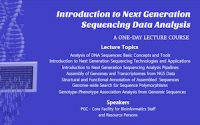
PGC’s bioinformatics team conducts introduction to NGS Data Analysis
The Core Facility for Bioinformatics of the Philippine Genome Center is conducting a lecture titled ‘Introduction to Next Generation Sequencing Data Analysis‘ from 8 AM to 6 PM in the AVR, The Marine Science Institute, University of the Philippines, Diliman, Quezon City.
On the RAI Genomics Lab & Call for International Collaborations
On the RAI Genomics Lab & Call for International Collaborations