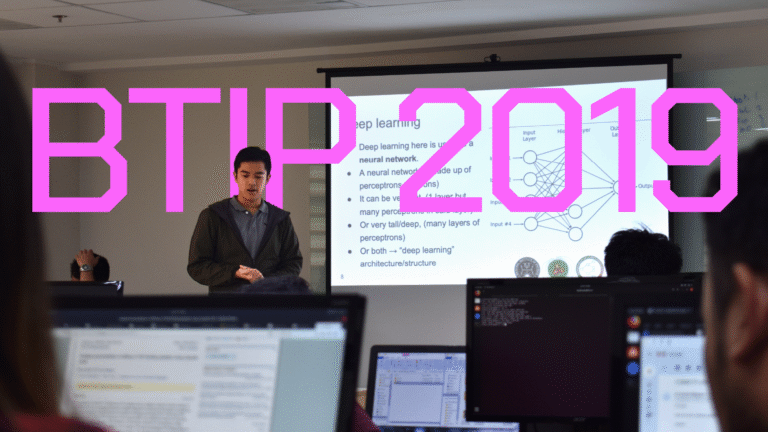
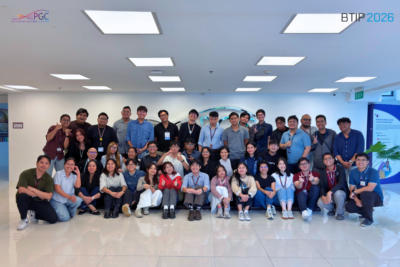
On July 24, 2026, the Core Facility for Bioinformatics concluded the 2026 Bioinformatics Training and Internship Program (BTIP), a six-week program that mentored and developed 26 interns from all over the Philippines.
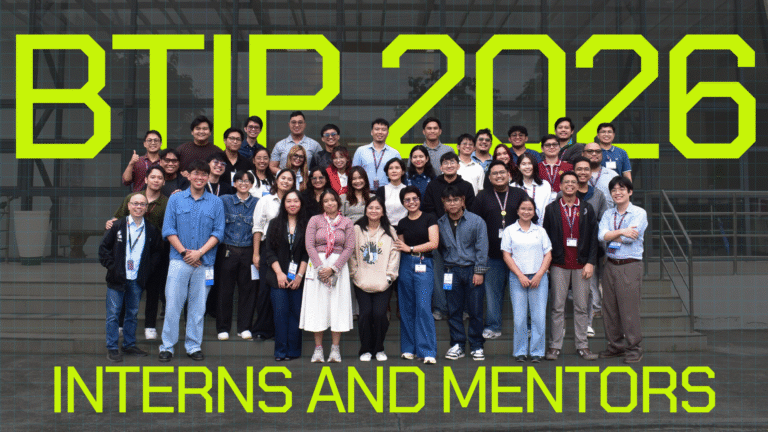
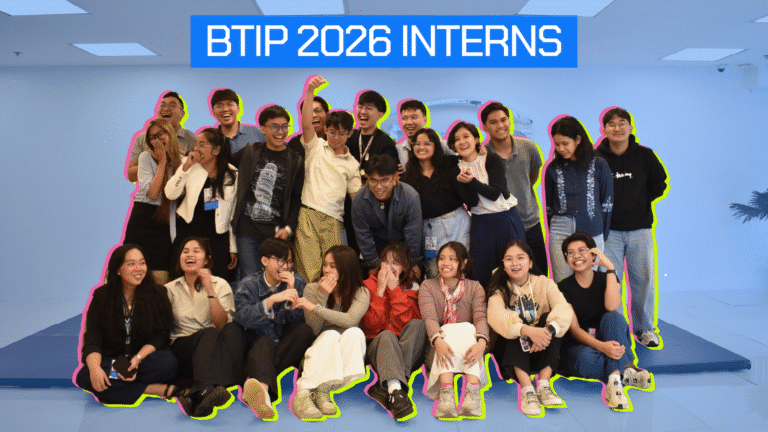
Now in its tenth year, the Bioinformatics Training and Internship Program has become an annual extension activity offered by the Core Facility for Bioinformatics (CFB) focused on empowering the next generation of bioinformaticians in the Philippines. The program is sought after by both undergraduate students and early-career researchers looking to specialize in bioinformatics research and development.
An interdisciplinary field of research that sits at the intersection of the life sciences, computer science, and mathematics and statistics, bioinformatics is concerned with the use of computational and statistical methods to organize and analyze biological data. Working with large datasets such as DNA, RNA, or protein sequences, bioinformaticians generate and analyze data and build algorithms and software that power research, medical, and industrial applications.
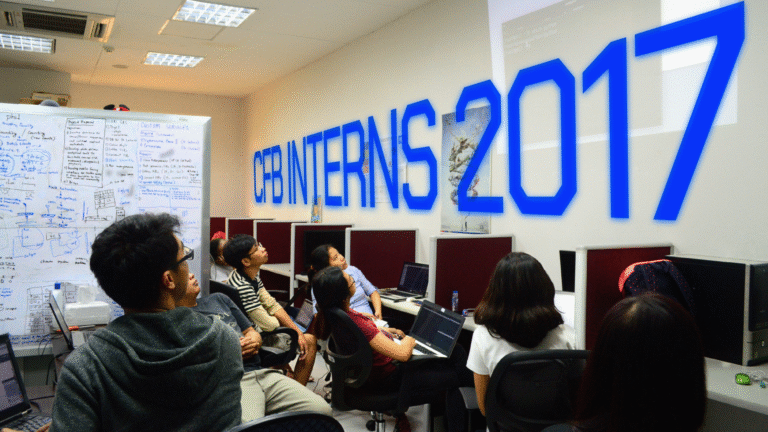
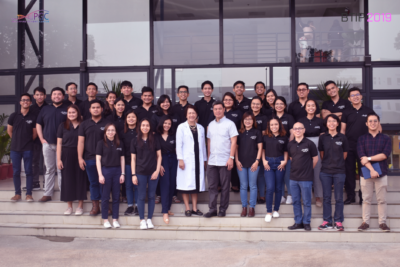
CFB first offered the internship in 2017 to ten CS students from UP Visayas and UP Diliman and, the following year, to nine undergraduate students from different backgrounds. In 2019, CFB received funding from the DOST-PCIEERD for a project entitled IMBUE: Internship prograM for increased local Bioinformatics Utility and Expertise, a one-year program that aimed to train 100 interns in one year while also spearheading research in bioinformatics education. To achieve this, CFB hosted four batches of 25 interns from March 2019 to May 2020 with each internship batch lasting around six weeks, giving interns the opportunity to be involved in meaningful bioinformatics projects involving data analysis and/or tool/pipeline development.
From the first batch of IMBUE trainees, Ria says that the internship helped realize a dream she had once put away. “As a Computer Science student then, I didn’t feel like I belonged in any of the usual Comp Sci niches. None of them really interested me. Luckily, our department offered a Bioinformatics elective. I loved biology and once had a pipe dream of being a doctor, so I thought it was as close as I could get. I loved the class, but I thought that was it. There didn’t seem to be many opportunities.” The internship announcement came at the perfect time, but applying also had its risks. “Their announcement of who got in was dangerously close to our deadline to pass our internship requirements. It was risky, but I waited because it was what I wanted. It all came together in the end, and I got in.”
“At the start, I was in over my head for sure. I understood the computer science part of it, but the biology part was so new to me. The only reason why it became easy was because I got to make a friend who I could learn from. I’d take care of the Comp Sci part and he’d take care of the molecular biology part. Afterwards, we’d translate each other’s expertise for each other. I guess that’s what bioinfo is for me, a constant conversation between two fields.”
Currently, Ria works as a bioinformatics engineer providing high-performance computing and cloud support to research groups within universities in the UK and Australia. “The internship inspired me to pursue the field. It was the gateway to all my jobs. Initially, I worked at PGC, but then the next two opportunities came because they were looking for somebody with experience in bioinformatics. Though now I am working more on high-performance computing, having a background in Bioinformatics gave me a perspective that allows me to understand and relate to the bioinformaticians and other researchers that we are helping get on the cloud.”
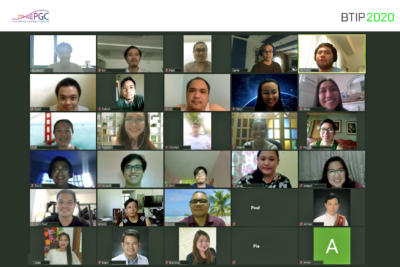
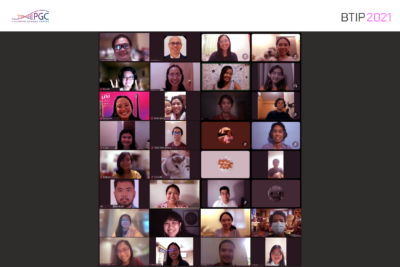
In 2021, at the height of the COVID-19 pandemic, the internship program was modified to be held virtually, allowing the CFB to continue its mandate of promoting bioinformatics and bioinformatics research to Filipinos. This also expanded the reach of the internship program, allowing for the participation of interns outside NCR who normally would not be able to travel and stay for the duration of the six-week program. For Khylle who participated in the virtual training and internship program in 2023, although the internship was online, the opportunity to collaborate on real-world projects outside of his typical research experience made for a fun and worthwhile experience. “As an MBB student, I was just broadly interested in bioinformatics. I introduced myself as being interested in drug design particularly with conotoxins and turritoxins from my initial thesis work back in MBB. But after the project pitches, I thought that the project about the creation of an interactive dashboard using COVID data was the most interesting! Despite it being very very different from the work I would end up doing for my thesis, I thought the project would be fun as I would get to learn a lot with respect to dashboards and data analytics. I was proud of what we were able to do. On top of having fun, I actually learned a lot about [visualizing] maps in Python because I needed to show localities of where samples were coming from.”
Khylle says that the internship made him excited to pursue bioinformatics as a career. “The internship has done a lot for me. I met the people that would help me out for my undergraduate thesis on bird genome/mitogenome assembly and this would lead to eventually work for CFB where I continued my work in biodiversity genomics. I don’t know if I would be able to continue doing bioinformatics as a job if I was not able to join the internship.” Khylle, together with his co-intern Ches, recently co-authored a paper addressing low genetic diversity in Philippine eagle populations.
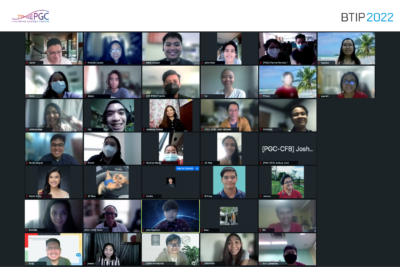
This year’s internship saw a return to the face-to-face format, but also marked the first ever “hybrid” cohort, opening a limited number of slots primarily for interns from outside Metro Manila who would not be able to attend in-person. Ged from the most recent cohort said that the internship pushed himself to improve and to be more confident as a researcher. “Ang naaalala ko about the internship was the initial pressure and yung amazement ko especially nung nag-start na yung introduction ng participants, [especially] the way they present themselves, talk, and explain what they are doing in their careers.” A Science Research Analyst from the Philippine Rice Research Institute in Muñoz, Nueva Ecija, Ged had the unique opportunity to work on his own data from his research group. “Mayroon kaming whole genome sequence data and wala akong kilala na bioinformatician sa PhilRice kaya I think isa ako sa mga inaasahan ng agency in that aspect.” The internship allowed him to explore the data using newly acquired skills and present the findings back to his institute. “Now, waiting lang ako sa magiging decision nila but I heard that they are planning to publish the results.” According to Ged, the internship is now enabling them to investigate other bacterial strains they are studying.
“Aside from the learnings, I think malaki yung naging impact sa akin when I see my co-interns work professionally–in my work kasi most of the time nasa field lang kami and may usual routine kami. This internship inspired me through my co-interns and mentors to improve. Kaya tinutuloy ko yung improvement na yun not just in bioinfo but also in the way I present a powerpoint and the way I work as a researcher.”
To date, the annual Bioinformatics Training and Internship Program has produced 284 bioinformaticians and computational biologists. In an age where data is the new currency and modern research looks towards computational power, bioinformatics is an increasing necessity rather than a niche in biological research. From healthcare and precision medicine, to conservation ecology, and agricultural biotechnology, bioinformatics can deepen and enrich our understanding and impact in different industries. In line with PGC’s mandate to advance equitable access to knowledge, technologies, and innovative products through capacity building, the Core Facility for Bioinformatics looks forward to making the program more accessible to Filipinos all over the country, with the hope that this will continue to inspire a new generation of Filipino scientists across different disciplines.
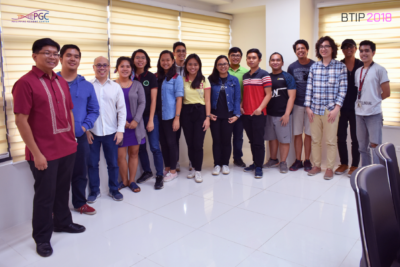
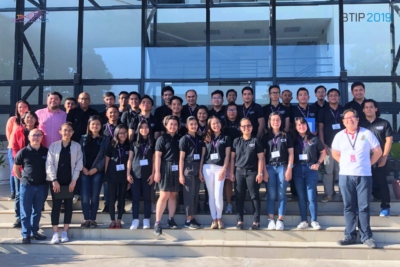
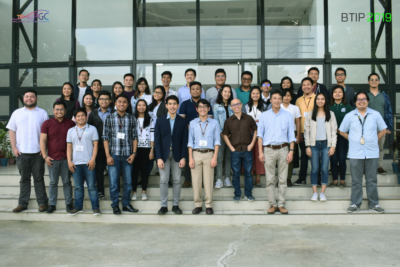
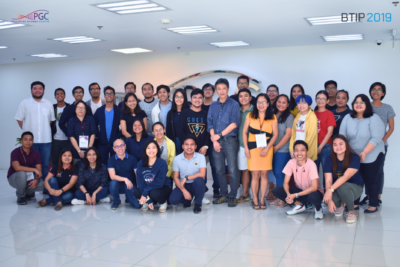
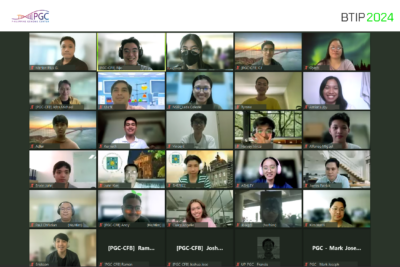
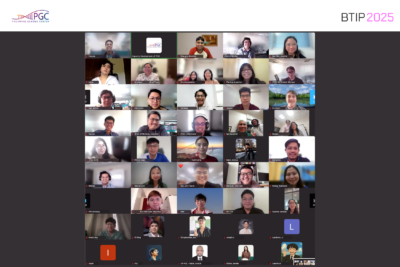
The call for applications for the annual Bioinformatics Training and Internship Program of the Core Facility for Bioinformatics is usually released in late March – early April, with the program usually running during the midyear semester of the University of the Philippines. Updates are shared through PGC’s website and its official social media pages (Facebook, X (formerly Twitter), LinkedIn) @phgenome