
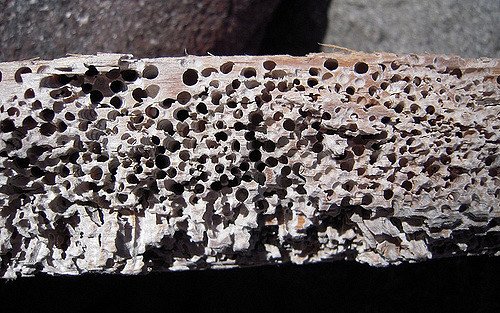
The “wooden-steps” hypothesis [Distel DL, et al. (2000) Nature 403:725–726] proposed that large chemosynthetic mussels found at deep-sea hydrothermal vents descend from much smaller species associated with sunken wood and other organic deposits, and that the endosymbionts of these progenitors made use of hydrogen sulfide from biogenic sources (e.g., decaying wood) rather than from vent fluids.

Data Management Workshop
The short session on Data Management is organized for users of the PGC Bioinformatics facility last April 19, 2017 at the NIMBB Conference Room. Biological data is constantly increasing in size and complexity, and with these upcoming trends, the short workshop is conducted to be better equipped in handling these data on the CFB cluster.
TGIF Seminar: April 21, 2017
Held usually at 3:30pm on Fridays, TGIF discussions are informal talks on current scientific topics and events.
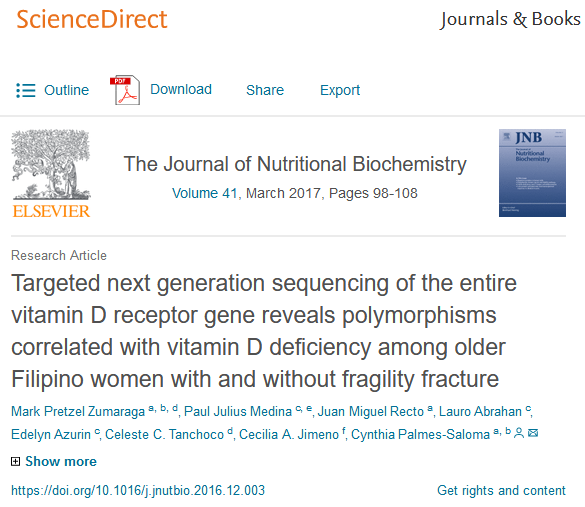
Targeted next generation sequencing of the entire vitamin D receptor gene reveals polymorphisms correlated with vitamin D deficiency among older Filipino women with and without fragility fracture
This study aimed to discover genetic variants in the entire 101 kB vitamin D receptor (VDR) gene for vitamin D deficiency in a group of postmenopausal Filipino women using targeted next generation sequencing (TNGS) approach in a case–control study design.

Characterizing a novel site-heterogeneous codon-based model of constrained protein evolution
Held usually at 3:30pm on Fridays, TGIF discussions are informal talks on current scientific topics and events.
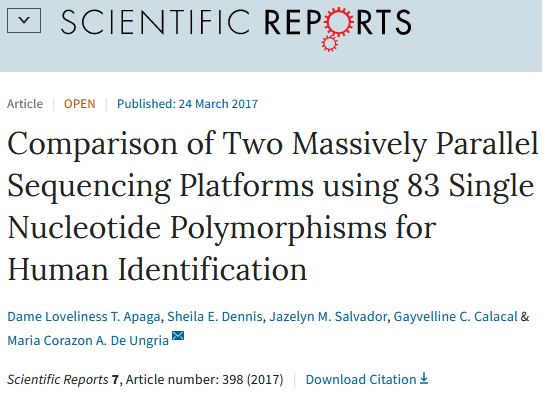
Comparison of Two Massively Parallel Sequencing Platforms using 83 Single Nucleotide Polymorphisms for Human Identification
The potential of Massively Parallel Sequencing (MPS) technology to vastly expand the capabilities of human identification led to the emergence of different MPS platforms that use forensically relevant genetic markers.

PGC-GeoSmart-FIZ Symposium on Cancer Genomics
The event aims to explore collaborations between the PGC and GeoSmart (a Filipino startup biotech company) & FIZ (Frankfurt Innovation Center, Germany).

Introduction to Genomics and Bioinformatics
The Philippine Genome Center (PGC) conducted an introductory molecular biology workshop at the DOST-PCAARRD Innovation and Technology Center (DITC) in Los Baños, Laguna on March 3, 2017.

Looking Beyond What We See: The Evolving Role of Genomics in Ocular Disease
Program Director of the DNA Sequencing Core Facility, Dr. Ma. Anita M. Bautista will be a resource speaker for an event hosted by the Manila Doctors Hospital Department of Opthalmology on Feb. 28, 2017.

PGC Delegates Attend the Winter Institute for Statistical Genetics 2017
Three members of the DNA Sequencing and Bioinformatics Facility of the Philippine Genome Center (PGC) attended the recently concluded Winter Institute for Statistical Genetics (WISG) held at the New York University Abu Dhabi (NYUAD), Abu Dhabi, United Arab Emirates, last January 22-24, 2017.